









Compare starting costs
Tripo H3.1 uses fewer credits than Meshy 7.1 at default settings for the same input mode. Compare the mesh and texture settings as well as the starting cost.
Inspect Tripo H3.1 →Looking for a Meshy AI alternative? Compare six alternative versions by input, controls and current Quady3D cost. Inspect real case files and the shared-input Tripo test before choosing.
Six alternative versions across five model families, with Meshy 7.1 as the baseline. This page covers workflows available in Quady3D; provider platforms can offer additional features.
Reviewed October 1, 2026 · Quady3D models and credit costsQuady3D provides paid access to these alternatives and to Meshy. Compare the available settings, current credit costs, and 3D examples before choosing.
Tripo H3.1 uses fewer credits than Meshy 7.1 at default settings for the same input mode. Compare the mesh and texture settings as well as the starting cost.
Inspect Tripo H3.1 →Inspect Tripo P2 for native quads or Rodin for mesh and material choices. Meshy also has remesh controls; compare the actual files and editing effort.
Use the Hunyuan Sketch to 3D workspace for a drawing. It has separate settings and costs; check the generated depth and hidden surfaces as well as the outline.
Open Sketch to 3D →Review TRELLIS.2 for use on your own computer, or try Hi3D with one image or multiple views in Quady3D. Running a model locally and generating online have different costs.
If Meshy 7.1 already meets your silhouette, remesh and material requirements, test a specific improvement before switching. It offers text, image and multi-view input here, with polygon, topology and PBR controls.
 MeshyMeshy 7.1
Default Quady3D costs: Image 120 credits · Text 144 credits · Multi-view 120 credits.
Choose the version and input you need, then inspect its file before generating your own.
Each model card includes its inputs, trade-offs, default credits and case evidence.
| Model / reason to try | Inputs on Quady3D | Controls and trade-offs | Quady3D defaults | Case evidence |
|---|---|---|---|---|
 TripoTripo H3.1 TripoTripo H3.1Try another engine for text, image or multi-view, with a lower default Quady3D cost. | Image →Text →Multi-view → | Geometry and texture quality settings, optional PBR and output-density controls in the creator. Dense output can need substantial reduction. The new camera sample is 1.39 million triangles; that one file is not a typical-size or speed benchmark. | Image: 30 creditsText: 20 creditsMulti-view: 30 credits | Inspect GLB case →Same-image camera test → |
| TripoTripo P2 Try a native-quad generation workflow when editable topology is the priority. | Image →Text → | Tripo documents native quad topology. Quady3D exposes text and single-image P2 generation with topology and face-limit controls. Inspect edge flow and deformation before rigging. P2 features shown in Tripo Studio, including multi-view and regional Mesh Edit, are not all available in Quady3D. | Image: 110 creditsText: 110 credits | Inspect GLB case →Same-input comparison with Meshy: not yet tested. |
 Hyper3DRodin Gen-2.5 Hyper3DRodin Gen-2.5Compare another engine's explicit mesh and material choices. | Image →Text → | Rodin Gen-2.5 documents triangle or quad meshes, face-count targets and PBR or shaded material output. Quady3D offers text and single-image creation for this version. Inspect the complete model and check whether its detail suits your project's performance needs. | Image: 40 creditsText: 40 credits | Inspect GLB case →Same-input comparison with Meshy: not yet tested. |
 TencentHunyuan3D 3.0 TencentHunyuan3D 3.0Add a separate sketch workflow alongside text and image creation. | Image →Text →Sketch · separate workspace → | Geometry, face-count and PBR options. Sketch-to-3D uses a separate Hunyuan model and settings. Hunyuan3D 3.0 hosted generation differs from open Hunyuan3D 2.x releases. Check the exact version, hidden surfaces and material response. | Image: 63 creditsText: 63 credits | Inspect GLB case →Same-input comparison with Meshy: not yet tested. |
 Microsoft ResearchTRELLIS.2 Microsoft ResearchTRELLIS.2Evaluate an open image-to-3D model, locally or through paid hosting. | Image → | Microsoft's image-conditioned model supports PBR surface attributes; Quady3D exposes resolution, texture-size and mesh-budget settings. One image does not establish the back. Local setup requires suitable GPU hardware and dependencies; hosted Quady3D generation uses paid credits. | Image: 20 credits | Inspect GLB case →Same-input comparison with Meshy: not yet tested. |
 Math MagicHi3D V3.0 Math MagicHi3D V3.0Try another image or multi-view engine for your reference object. | Image →Multi-view → | Choose geometry only, textures or PBR materials, with face-count and resolution settings. Multi-view has separate settings and cost. Text input is unavailable here. Inspect inferred surfaces and the returned mesh; a higher face budget does not prove better reference fidelity or printing readiness. | Image: 210 creditsMulti-view: 210 credits | Inspect GLB case →Same-input comparison with Meshy: not yet tested. |
Costs use default settings, which differ between models. Compare results at a similar mesh and texture budget. Sketch has its own cost. See Quady3D credit plans →
Need rigging, animation or an engine plugin? Check those features separately. This table covers input modes available in Quady3D, and the six examples below are static models. Each service has its own additional features.
Try these models in one workspace. The table uses Quady3D credits; changing the model or settings changes the generation cost.
Quady3D pricing →Other services have their own plans and credits. Check the current prices, downloads and usage terms in the service you will use.
TRELLIS.2 publishes code and weights under MIT terms, with additional components covered by their own usage terms. Local use needs suitable hardware and setup. Hosted Quady3D use costs credits; Hunyuan3D 3.0 is a different hosted version from open 2.x releases.
TRELLIS.2 repository ↗


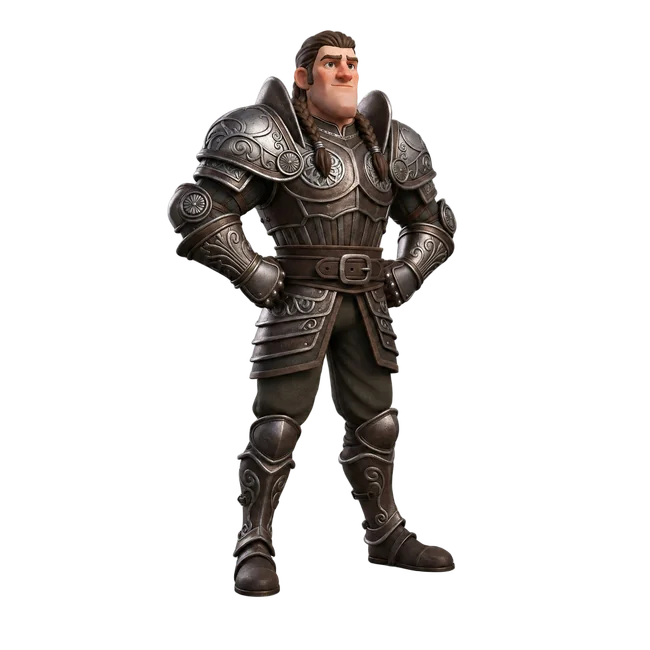
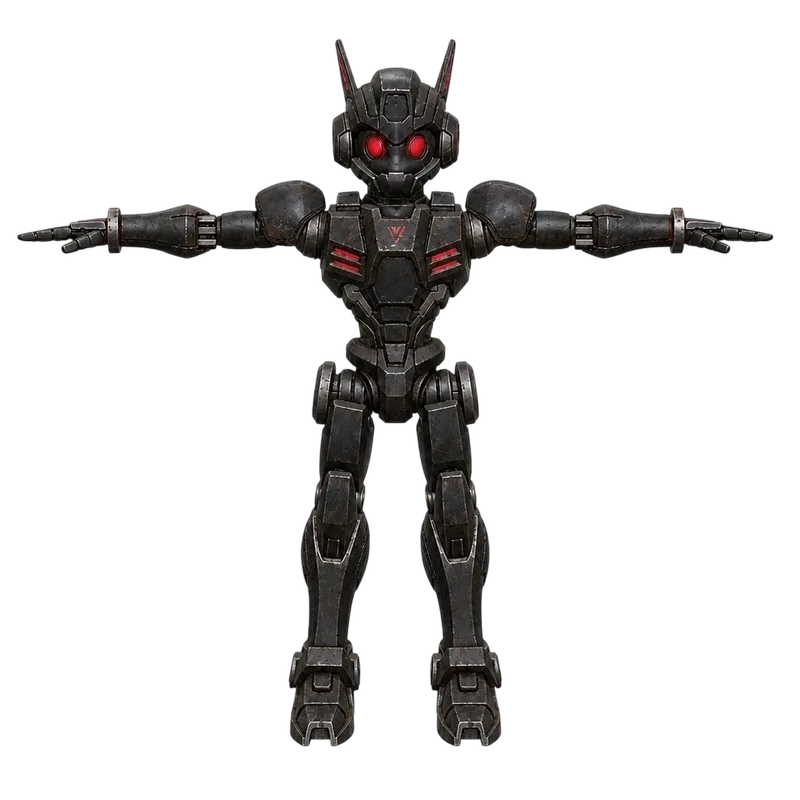
Both models received this image. Meshy used a 30,000-polygon remesh target; Tripo used native density. Inspect the shape, texture and file size for your intended use.
Open both original GLBs, rear views and settings →These six examples use different inputs. They show each workflow's source, saved settings and real returned file. They are separate from the paired camera comparison above.
TripoTripo H3.1Try another engine for text, image or multi-view, with a lower default Quady3D cost.
Before switching: Dense output can need substantial reduction. The new camera sample is 1.39 million triangles; that one file is not a typical-size or speed benchmark.
TripoTripo P2Try a native-quad generation workflow when editable topology is the priority.
Before switching: Inspect edge flow and deformation before rigging. P2 features shown in Tripo Studio, including multi-view and regional Mesh Edit, are not all available in Quady3D.
Hyper3DRodin Gen-2.5Compare another engine's explicit mesh and material choices.
Before switching: Quady3D offers text and single-image creation for this version. Inspect the complete model and check whether its detail suits your project's performance needs.
TencentHunyuan3D 3.0Add a separate sketch workflow alongside text and image creation.
Before switching: Hunyuan3D 3.0 hosted generation differs from open Hunyuan3D 2.x releases. Check the exact version, hidden surfaces and material response.
Microsoft ResearchTRELLIS.2Evaluate an open image-to-3D model, locally or through paid hosting.
Before switching: One image does not establish the back. Local setup requires suitable GPU hardware and dependencies; hosted Quady3D generation uses paid credits.
Math MagicHi3D V3.0Try another image or multi-view engine for your reference object.
Before switching: Text input is unavailable here. Inspect inferred surfaces and the returned mesh; a higher face budget does not prove better reference fidelity or printing readiness.
The saved cases show successful outputs with different inputs and budgets, so they do not establish an equal-quality cost comparison. There is no measured speed, failure-rate or universal quality ranking; cleanup time has not been measured. Check the file in your destination app and review source rights and model terms before commercial use.
Try Tripo H3.1 for a lower default credit cost or Tripo P2 for editable quads. For materials, sketches or local generation, use the table to match the model to your task. Compare your reference with Meshy before switching.
Yes. Verify your email to receive free Quady3D credits and try supported models. TRELLIS.2 can also run locally with suitable hardware and setup; its license and dependency terms apply. Hunyuan3D 3.0 here differs from open 2.x releases.
Tripo H3.1 has lower default Quady3D costs than Meshy 7.1 for the shared input modes. Defaults use different mesh and texture settings, so a cheaper first run does not guarantee a cheaper usable asset. Retries and editing effort also matter.
Tripo H3.1 and Hi3D 3.0 support multi-view generation here. Hi3D has separate multi-view settings and costs. For a drawing, use the separate Hunyuan Sketch to 3D workflow. Tripo P2 currently supports text and single-image input in Quady3D.
No. Only the Meshy 7.1 and Tripo H3.1 camera pair uses the same image, and its output budgets differ. The six alternative cases use separate inputs and show workflows rather than a quality ranking.
Inspect the complete file first. Games need topology, UV, material, scale, pivot and engine-import checks; native quads alone do not prove animation readiness. Printing needs closed geometry, adequate thickness, physical scale and a slicer check. Confirm the export package, service terms and rights to your source before commercial use.